
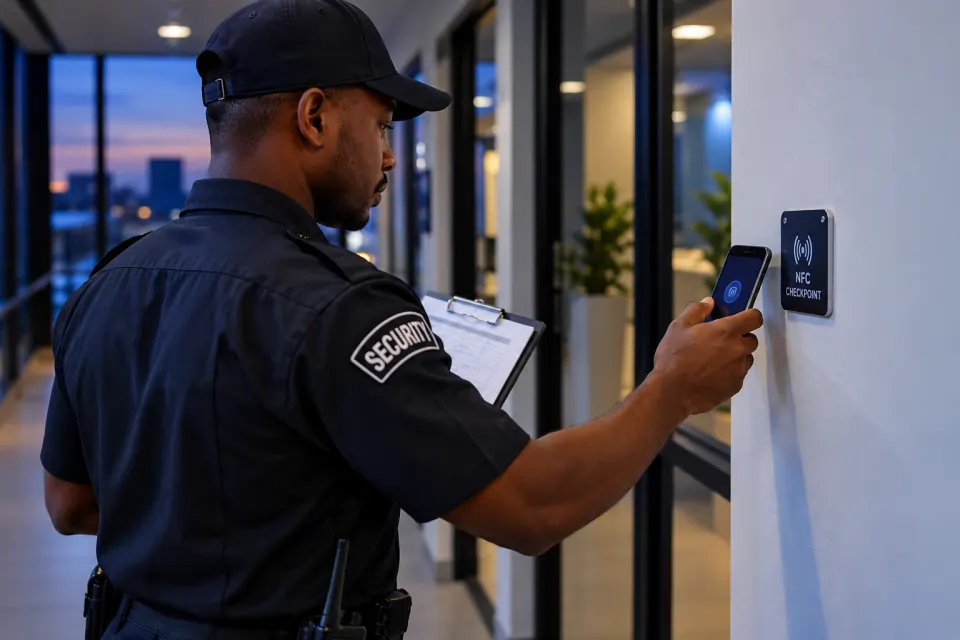
A paper patrol log shows that a form was filled in, not that the round was actually walked.
That difference matters. When a site relies on handwritten sheets, managers are trusting the paperwork instead of verifying the patrol. Most of the problems below are not caused by careless officers. They come from the format itself, and they are easy to miss until an incident exposes them.
Mistake 1: Records are completed after the round, not during it
On a paper log, the officer writes the time and signs. Nothing ties that entry to the moment, or the place, where the check happened.
In practice this leads to several familiar problems:
- Times are estimated or filled in at the end of a shift.
- A whole page is completed at once, from memory.
- Entries are rounded to match the schedule rather than reflect what happened.
None of this has to be deliberate. A busy night, an interruption or a long shift is enough. The result is a record that looks complete but cannot be relied on.
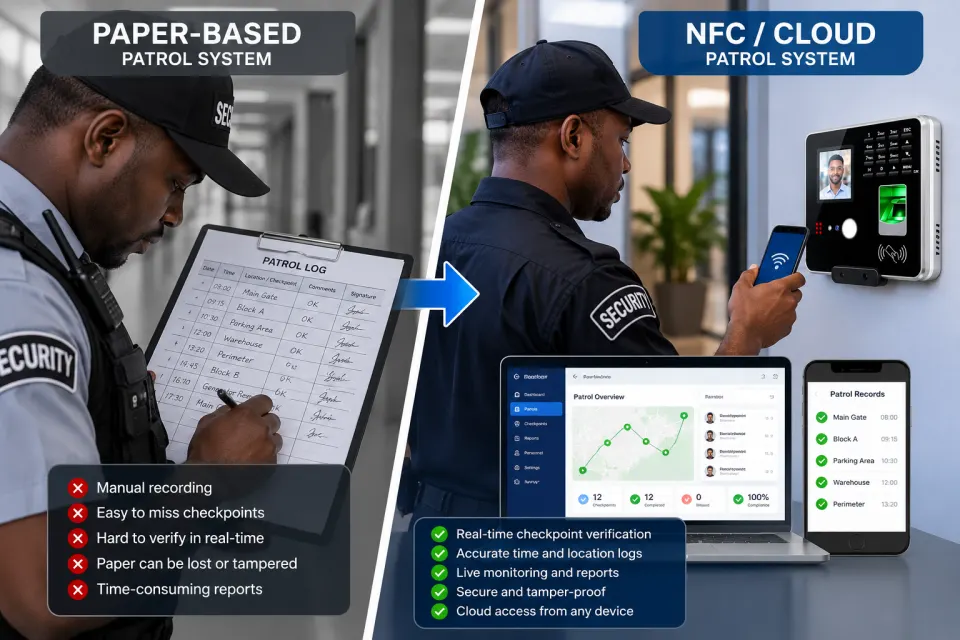
Mistake 2: Gaps stay invisible until something goes wrong
A missed checkpoint on paper is only a blank line, and a blank line is easy to overlook. Supervisors usually see the log after the shift has ended, sometimes days later. By then the gap cannot be fixed, only explained.
Paper also gives a manager very little context while the shift is running. You cannot see which officer is at which point, whether a round has started or whether a site has gone quiet. For multi-site operations, this means managing by assumption.
Other common weaknesses include:
- Sheets that are lost, damaged or left at the wrong site.
- Handwriting that is hard to read when records are reviewed.
- No simple way to compare rounds across officers, sites or weeks.
Mistake 3: Treating the log as proof when it is only a claim
If a client questions whether a site was covered, a paper log is a weak answer. It is a statement written by the person whose work is being checked. It can be disputed, and it is difficult to defend if the entries look uniform or were clearly written together.
Reports built from paper also take time. Someone has to collect the sheets, read them, and type the information into a spreadsheet or document. That is time spent on admin instead of on improving security, and each manual step is another chance for error.
What NFC and QR checkpoints change
The idea behind checkpoint-based patrols is simple. Instead of writing that they were somewhere, the officer goes to the location and scans a checkpoint there, either an NFC tag or a QR code. The scan is the record.